To prevent scratches and damage to jade during shipping, use custom-fit foam inserts, silk-lined divided boxes, micro-bubble cushion wraps, and sturdy outer containers. These materials hold jade pieces securely while cushioned barrier layers protect against surface abrasion during transit vibrations and impacts.
Picture unboxing the jade pendant you bought online, heart sinking at hairline scratches marring what was captured as flawless in photos. That quiet gasp of disappointment echoes across countless kitchens and living rooms. Jade’s beauty feels intimately personal—whether it’s an heirloom piece mailed for appraisal or a vibrant carving arriving dulled from transit handling. Yet we often rely solely on vendor promises without understanding what actually safeguards that cool, mineral smoothness vibrating trucks and hasty handlers can degrade. This practical checklist cuts through packaging marketing claims, breaking down how abrasion protection works into tangible steps you can feel, hear, and test yourself before trusting irreplaceable pieces to the shipping journey.

Consider why packaging that seems protective often fails: it's designed for visuals at point of sale, not transit physics. This gap between appearance and function requires understanding jade’s inherent vulnerabilities during movement.
Jade's 6-7 Mohs hardness puts it at risk against harder surfaces. Imagine your jade bracelet rattling inside a shipping box at 200 vibrations per minute—even soft cardboard can abrade it over hours. Jewelry retailers may pack items attractively with satin ribbons that tangle; specialty stone shipping prioritizes immobilization without decorative risk. A friend unpacked her carved jade horse statue to find its lifted leg snapped—the flaw wasn’t the foam insert per se but insufficient cavity support where pressure pooled along fine protrusions during impacts.
Vibration dispersion isn’t abstract science—it starts when you press into foam padding. Slow-thick rebound matters because rapid bounce-back transmits more shock. Museum packaging teams press-test each foam batch monitoring recovery rates. Think kinetic energy: a 1-pound jade bookend dropped from waist height generates 75 pounds of impact force against the box floor without dense cushion buffers. This explains why layered protection matters more than box thickness alone. That rigid double-walled container? Its primary purpose is resisting deformation that would crush padding gaps—consistency in cushioning proves just as vital as volume.
Effective anti-abrasion systems work through layered dissipation principles. This section translates physics to practical choices when selecting packaging components.
Polyethylene foam works through controlled collapse—its air pockets deform during impact, converting kinetic energy to heat rather than transmitting force. Picture car crumple zones applied to jewelry: density determines capacity. For typical pendants under 500g, low-density foam (20kg/m³) provides protection without excessive rigidity. But temperature matters too; when parcels sit in hot trucks over 80°F, synthetic foams temporarily soften, reducing protective capabilities. That’s why museums maintain temperature-controlled containers for sensitive transports.
Microbubble cushion wrap creates micro-cushions yet risks electrostatic charge buildup attracting dust that abrades polished surfaces. Silk proves superior—its smooth filaments minimize contact points while neutralizing static. One mineral courier compared silk-wrapped jade beads shipped across bumpy roads versus cotton: under magnification, the cotton pack showed micro-grooves from microscopic fabric abrasion during constant vibration. Remember softness is relative: what feels smooth against skin may still damage jade at transport scales.
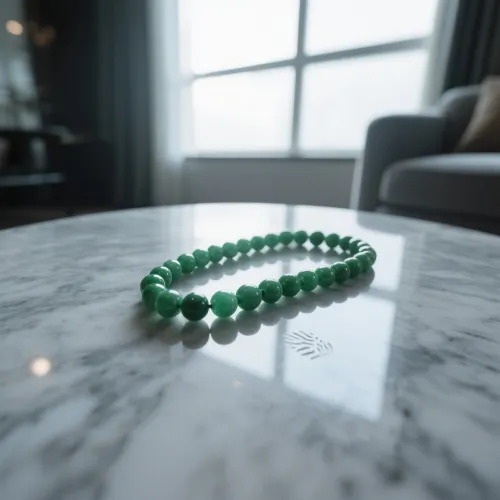
Your unpacking ritual involves subtle cues many miss—here’s how to transform quick glances into damage diagnostics before discovering scratches.
First, inspect exterior labels: activated pressure indicators (often round stickers) turning red signify drops exceeding 25g force—a key risk threshold. Inside the box, examine foam imprints after removing jade. Deep cavity marks suggest insufficient padding gaps concentrating pressure, while perfectly preserved silhouettes indicate ideal suspension without surface contact. Now hold the jade itself under bright light watching for two concerns: fine whitish haze (surface bloom) implying chemical reactions with packaging, or microfractures along carving stress points signaling vibration trauma.
Not all jade is created equal—carving depth, mineral types, and surface finishes require tailored packaging approaches.
Choosing foam involves balancing protection versus excess squeeze forces. Delicate translucent jadeite fractures more easily than tough nephrite, demanding gentler low-density support. Picture a pendant versus heavy bookend carving: the pendant needs lighter open-cell foam to avoid pressure damage, while heavier pieces require denser cushioning for energy dispersal. One appraiser measured compression depths across foam types: light pendants need cavity clearance at least double the item thickness; heavy carvings require foam density calibrated by kg/m³ units stamped on shipping samples.
Highly polished jade demands meticulous pre-wrapping using techniques like acid-free tissue nests filling grooved details before general cushioning. Without reaching into crevices, vibrations transfer directly through air pockets to delicate ridges. Another museum trick: rotate antique nephrite items midway during long-term storage to disperse pressure points as foams slowly compact over years. Remember packaging choices carry longevity implications beyond shipping—PVC foam plasticizers migrating onto jade cause irreversible greying known as "material fatigue bloom."
True protection extends beyond cardboard boxes to climate control and labeling psychology—because jade’s vulnerability doesn’t pause when tracking updates stop.
Labels like "FRAGILE: ACCELEROMETER MONITORED" leverage behavioral science; couriers handling monitored boxes apply gentler techniques. Verifying ISTA 3A certification means packaging survives standard parcel drop tests simulating conveyor belt tumbles and stacking impacts. UV exposure during summer shipping can alter untreated translucent jadeite—UV-resistant containers or opaque exterior boxes preserve color integrity during warehouse delays. One auction house added silica gel packs controlling humidity when shipping porous nephrite pieces prone to dehydration cracks at below 40% relative humidity.
Rotate stored jade pieces every 3-6 months and periodically replace compression foams to maintain suspension performance as materials age. Monitor foam for stiffness or cracking from thermal cycling. Permanent display cases benefit from museum-grade microclimate systems sustaining stable humidity (around 45-50%) using specialized water-permeable membranes instead of standard silicones reacting with jade’s mineral matrix.
Condense these key takeaways into a pocket-sized mental checklist during shipment preparation:
Next time online checkout promises "secure jade packaging," ask specifically about cavity clearance tests and foam specifications—not just external box layers. Picture your upcoming shipment unpacking: hold that anticipation of flawless arrival not as hope, but knowledge-backed confidence. If that carved rabbit statue could speak during its cross-country journey, what transit protection details would you want it whispering?
Why is silk preferred over cotton for wrapping jade? Silk minimizes micro-contact points, neutralizes static charge better than plant fibers, and avoids shedding particulates under vibration—critical for preventing hairline abrasions on polished surfaces.
How thick should cushion layers be for jade bracelets? Bracelets facing stacking pressure risks need foam layers exceeding 1 inch thickness between pieces plus rigid boxes preventing exterior compression—targeted density around 25kg/m³ typically balances safety without stiffness damage.
Can bamboo packaging safely protect jade long-term? Bamboo pulp may slowly release lignins under humidity that risk amber-tinted surface deposits and pH shifts. Inert polyethylene or silk-lined compartments prove safer for permanent stowage.


$
